


The electric bike battery market continues to grow strongly
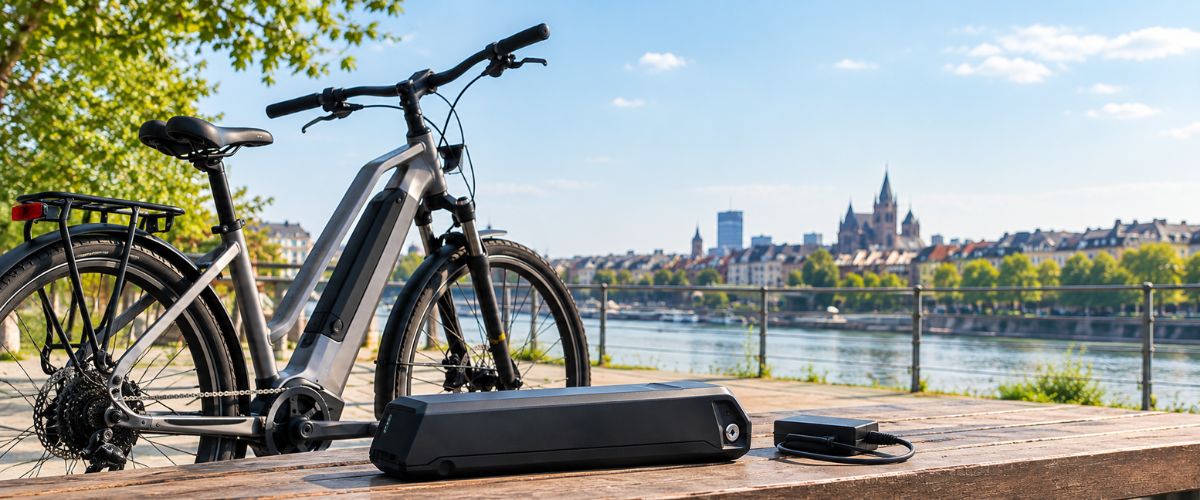
The electric bike battery market is growing, driven by the rise of sustainable mobility, the development of electric bikes in cities and rapid advances in energy storage technologies. In Europe, which already accounts for nearly one-third of the global market, the momentum is also particularly strong.
Key takeaways:
- The global electric bike battery market is expected to almost triple by 2034.
- With the market driven by the development of cycling infrastructure, policies supporting sustainable mobility and environmental challenges, Europe accounts for nearly 29% of the global market.
- Bike batteries are evolving towards greater range and intelligence, with the development of solid-state batteries, wireless charging and connected battery management systems.
- The growth of the market is creating opportunities for battery reconditioning, repair and recycling.
A global market expected to almost triple by 2034
In 2025, the global electric bike battery market was valued at $18.90 billion. It is expected to reach $21.05 billion in 2026, before continuing to grow to $55.04 billion by 2034, according to the latest data from Fortune Business Insights.
This growth is taking place against a backdrop of rapid development of electric bikes. Increasingly used for daily commutes, journeys between home and work, leisure activities and even the transportation of goods, electric bikes are gradually establishing themselves as an alternative to traditional means of transport.
Lithium-ion batteries are by far the most widely used
Among the various technologies, lithium-ion batteries clearly dominate the market. They are expected to account for 72.35% of the global market in 2026.
This is mainly due to their high energy density and lifespan. A lithium-ion battery can generally withstand several hundred charging cycles, or even more depending on its design, use and maintenance conditions. This is also why we only sell and recondition lithium-ion batteries at Doctibike.
The battery is one of the most important components of an electric bike: it determines the bike's range, weight, performance and price. Manufacturers are therefore seeking to develop electric bike batteries that are increasingly compact, lightweight, efficient and durable.
Europe accounts for nearly 29% of the global market
Europe occupies a particularly important position in the bike battery market.
In 2025, the European market accounted for 28.91% of the global market, with an estimated value of $5.61 billion. It is expected to reach $5.75 billion in 2026.
This momentum is mainly driven by the development of cycling infrastructure and public policies promoting alternative forms of mobility. Countries such as the Netherlands and Denmark have particularly well-developed cycling infrastructure. Investments in cycle lanes, bike-sharing services and charging infrastructure are helping to create a favourable environment for the development of electric bikes. In France, as in other countries, financial incentives for purchasing an electric bike are helping to support the market.
Growing awareness of environmental issues also plays an important role. According to a study conducted by Ifop in 2026, 51% of French people see electric bikes as an alternative to cars for short journeys.
Finally, the development of electric bike-sharing services is a growth factor. Professional fleets require reliable batteries capable of withstanding intensive use and numerous charging cycles.
Capacity: a decisive purchasing criterion
Changing usage patterns are also pushing manufacturers to offer batteries with increasingly greater range. The segment of batteries with a capacity between 451 and 650 Wh is expected to account for 33.97% of the market in 2026. These capacities meet a wide range of needs, from daily commutes to longer rides.
Market development is not only about battery performance. Their integration into the bike's design is also an important trend. Batteries integrated into the bike frame are particularly popular. They are expected to account for 65% of the market in 2026. This configuration makes it possible to maintain an appearance that is closer to that of a traditional bicycle.
Innovations that could transform the market
Among the innovations, solid-state batteries are attracting growing interest. This technology could provide higher energy density, improved safety and reduced charging times.
Wireless charging is also one of the innovations being explored. It could simplify the charging of electric bikes, particularly for electric bike fleet operators. However, the high cost is an obstacle to its development. The start-up Tiler, which offered a wireless charging solution for professionals, recently went bankrupt.
The future of the market also lies in integrating smart technologies into batteries. Battery management systems make it possible, in particular, to monitor various parameters and optimise battery operation. Connected to mobile applications, some solutions such as those from Bosch also allow users to monitor the condition of their battery or obtain information about its range. This development is part of the broader growth of connected devices and smart mobility systems.
What are the barriers to purchasing?
Despite this growth, several obstacles could slow down the development of the market.
The cost of bike batteries
The cost of producing batteries remains a significant issue. Batteries represent a substantial share of the price of an electric bike. Fluctuations in the price of certain raw materials used in their manufacture, such as lithium, can have an impact on the final cost of the bike.
Lack of infrastructure and safety concerns
According to the 2026 IFOP study, danger and a lack of infrastructure, such as cycle lanes, are barriers to purchasing for 42% and 35% of French people respectively.
The lack of charging infrastructure is also an obstacle in certain areas. Although an electric bike can generally be charged at home, the development of suitable charging stations can make it easier to use electric bikes in public spaces.
New opportunities for battery reconditioning
This growth dynamic is leading to an increase in the number of batteries reaching the end of their useful life or experiencing a loss of range. This should lead to increased demand, both for the purchase of new batteries and for related services. At Doctibike, we are indeed seeing increased demand for our electric bike battery diagnosis, repair and reconditioning services, as well as for the purchase of reconditioned batteries.
In conclusion, with the increasing number of electric bikes in circulation, improvements in technology and the development of sustainable mobility, batteries are therefore becoming a strategic market for electric mobility.
Source: Fortune Business Insights, “Electric Bike Battery Market”, 2025–2034 data.